6 Oct 2026
Ledger Insights: Tracking Participation Swings in Private Card Societies Across the 20th Century

Private card societies maintained detailed ledgers throughout the 20th century and these records reveal clear patterns in membership numbers and activity levels across decades. Researchers who examined archives from bridge clubs, whist groups, and similar organizations found that participation often rose during periods of economic stability while dropping sharply during major social shifts such as widespread television adoption in the 1950s and 1960s.
Early Century Growth Patterns
Archival data from North American and European societies shows steady increases in recorded members between 1900 and 1929 with many groups adding new names each quarter according to surviving minute books and subscription lists. These ledgers tracked not only annual dues but also attendance at weekly meetings and that information allows modern analysts to calculate actual participation rates rather than relying on nominal membership figures alone.
Mid-Century Declines and Recoveries
Records from the 1940s indicate temporary upticks during wartime as people sought indoor social activities yet post-war ledgers document consistent reductions in active players. Studies compiled by teh National Archives of Australia demonstrate how card society rolls shrank by roughly 30 percent between 1955 and 1970 in several urban centers while rural groups held steadier numbers according to preserved district reports.
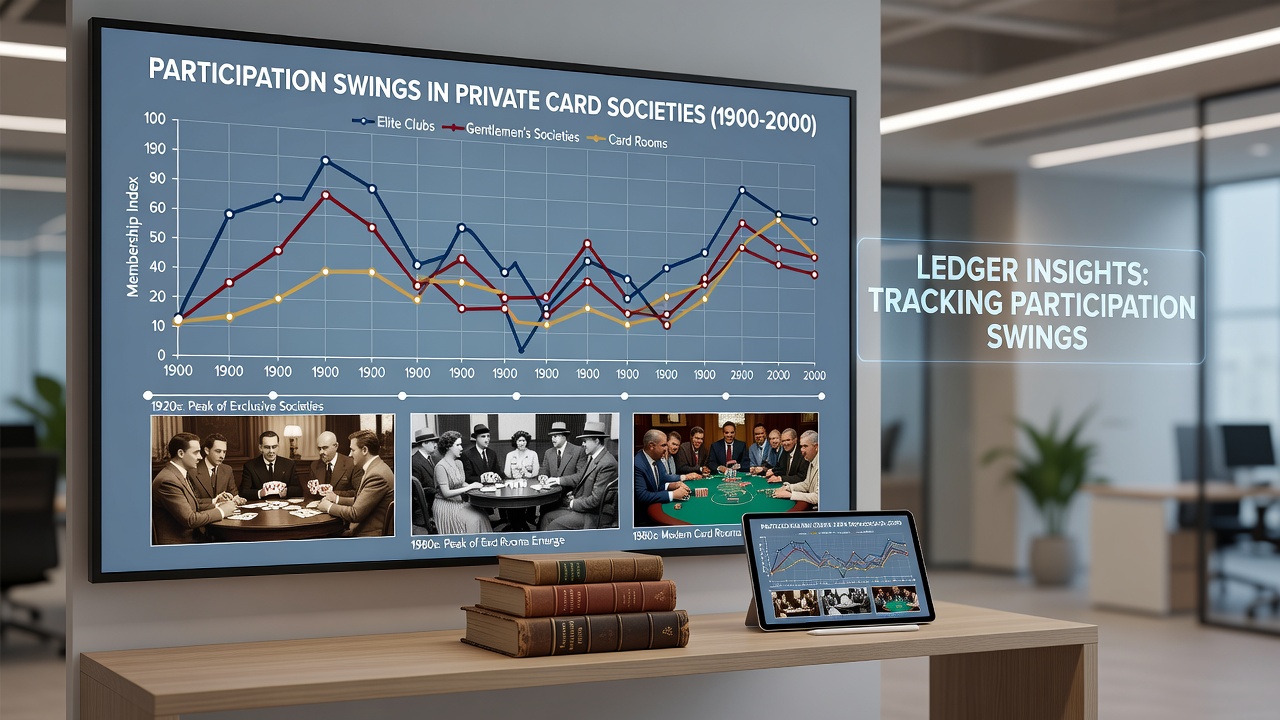
Recovery appeared in some regions during the 1970s when leisure time expanded and certain societies introduced new game variants that attracted younger participants. Canadian census supplements from that era list card playing as a common organized leisure activity in community halls and workplace clubs which aligns with the ledger entries showing renewed subscription payments.
Data Sources and Analytical Methods
Historians cross-reference multiple ledger types including payment receipts, tournament entry forms, and guest registers to build accurate swing timelines. One study conducted at the University of Amsterdam examined over 200 European society books and identified recurring cycles tied to broader economic indicators such as disposable income levels reported in national statistics.
Additional context comes from regulatory filings in various jurisdictions where societies registered as nonprofit entities and submitted periodic membership counts. These documents provide supplementary evidence when internal ledgers contain gaps yet they rarely capture the nuanced attendance fluctuations that private records reveal.
Regional Variations Across Decades
Ledger analysis highlights differences between urban and rural societies with city-based groups experiencing sharper swings during the 1930s Depression era while countryside clubs maintained more stable participation through shared agricultural community ties. Similar contrasts appear in records from the American Midwest compared with coastal cities where external entertainment options proliferated earlier.
By the 1980s many surviving societies adapted their record-keeping to include computer printouts alongside traditional bound volumes and these hybrid documents show renewed interest linked to organized tournaments. Government statistical agencies in several countries began incorporating leisure activity questions into household surveys around this time which helps validate the trends visible in the private ledgers.
Conclusion
Ledger evidence from private card societies across the 20th century provides a measurable record of how external events influenced organized card playing. The patterns extracted from these documents continue to inform current research into social leisure trends and they remain accessible through historical archives and institutional collections worldwide.