20 Oct 2026
Regional Card Game Venue Adjustments and Resulting Player Relocation Trends
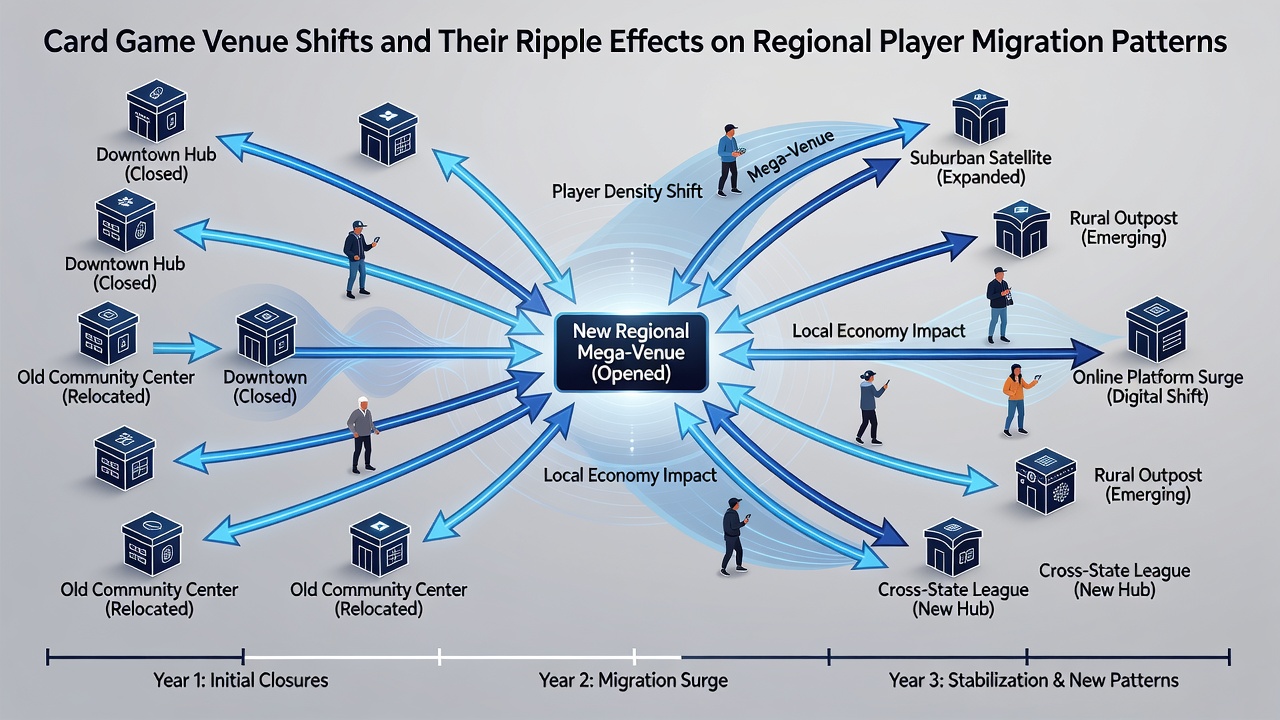
Card game venues have undergone notable adjustments in recent years, with closures, relocations, and new openings altering where enthusiasts gather to play. These changes create measurable shifts in how players distribute themselves across cities, states, and even countries, as participants seek consistent access to games that match their preferences and schedules. Data collected by regional gaming authorities shows patterns of movement that extend beyond simple travel to new sites, often involving longer-term decisions about residence or regular play destinations.
Factors Behind Venue Adjustments
Economic pressures, regulatory updates, and property developments drive many of these venue modifications, according to reports from the Nevada Gaming Control Board. Operators respond to rising operational costs by consolidating locations or moving to areas with lower overhead, while new licensing opportunities in previously restricted zones encourage fresh establishments. Observers note that when a major venue closes in one district, attendance at remaining sites in the same area can increase by 15 to 25 percent within the first quarter, based on figures compiled by industry trade groups.
Regulatory bodies in multiple jurisdictions track these transitions closely, since venue density affects tax revenue and enforcement resources. In October 2026, several provinces in Canada plan to release updated licensing frameworks that could accelerate additional adjustments, prompting operators to evaluate cross-border options. Players respond by adjusting their routines, with some traveling farther for preferred game formats while others explore entirely new regions that offer expanded tables or better payout structures.
Observed Migration Patterns
Player relocation does not always mean permanent moves. Short-term migration appears when groups coordinate travel to venues that host specific tournaments or cash games unavailable locally. Researchers from the University of Nevada, Las Vegas documented cases where weekly player counts at destination sites rose steadily for six months following a nearby closure, then stabilized as participants established new habits. Longer-term patterns emerge when players relocate their primary residence to areas with more stable venue options, a trend visible in census-linked gaming participation surveys.
What's interesting is how these movements create secondary effects on surrounding communities. Local transportation networks see increased demand along corridors connecting former and new venues, while hospitality businesses near surviving sites report higher foot traffic during peak playing hours. Data from Australian gaming associations indicates that regional player bases can shift by up to 40 percent within two years of significant venue consolidation, with the largest movements occurring among those who previously traveled under 30 minutes to their regular games.
Case Examples from Different Regions
Take the situation in several Midwestern U.S. states where multiple card rooms adjusted operations between 2023 and 2025. Attendance records show players from closed facilities redistributed toward larger hubs in adjacent states, creating measurable upticks in cross-border play. One study revealed that average session lengths at receiving venues increased because displaced players arrived in larger groups and stayed longer to justify the added travel time.
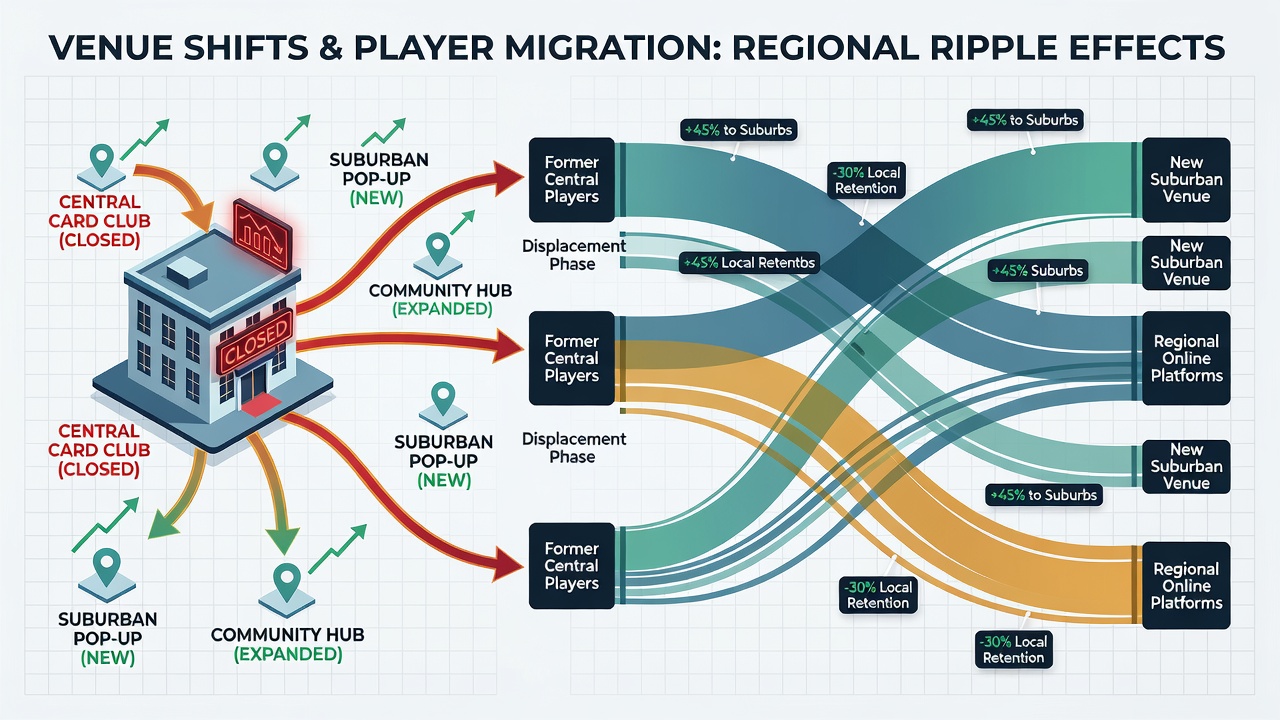
European markets present a contrasting picture. When venues in one country faced capacity restrictions, participants often migrated toward neighboring nations with more permissive rules, according to data compiled by the European Gaming and Betting Association. This movement affected not only table occupancy but also the mix of game types offered, as operators adapted menus to retain or attract the incoming player pool. Those who've tracked participation across decades observe that such shifts rarely reverse quickly, even after original venues reopen.
Broader Ripple Effects on Regional Play
Venue adjustments influence more than attendance numbers. They reshape social networks that form around regular games, with some longstanding player groups fragmenting while others consolidate at fewer locations. Industry reports highlight corresponding changes in tournament structures, prize pools, and even rule variations as operators compete for the relocated audience. The ball's in the operators' court when deciding whether to expand marketing in new catchment areas or focus resources on retaining core local participants.
October 2026 projections from several research institutions suggest continued adjustment cycles, particularly as online integration options expand and physical venues compete for the same player base. Figures reveal that regions experiencing net player inflow often see secondary growth in related services, including equipment suppliers and training programs, whereas outflow areas report contraction in those sectors.
Conclusion
Card game venue shifts generate predictable yet complex migration responses that extend across multiple regions and timeframes. Tracking these movements requires attention to both immediate attendance changes and longer-term demographic adjustments, supported by data from regulatory bodies and academic sources. The patterns established through these transitions continue to influence where and how card games are played well beyond the initial venue decisions.