3 Nov 2026
Tracing Interpersonal Links in Isolated Gaming Societies via Archived Letters and Participation Records
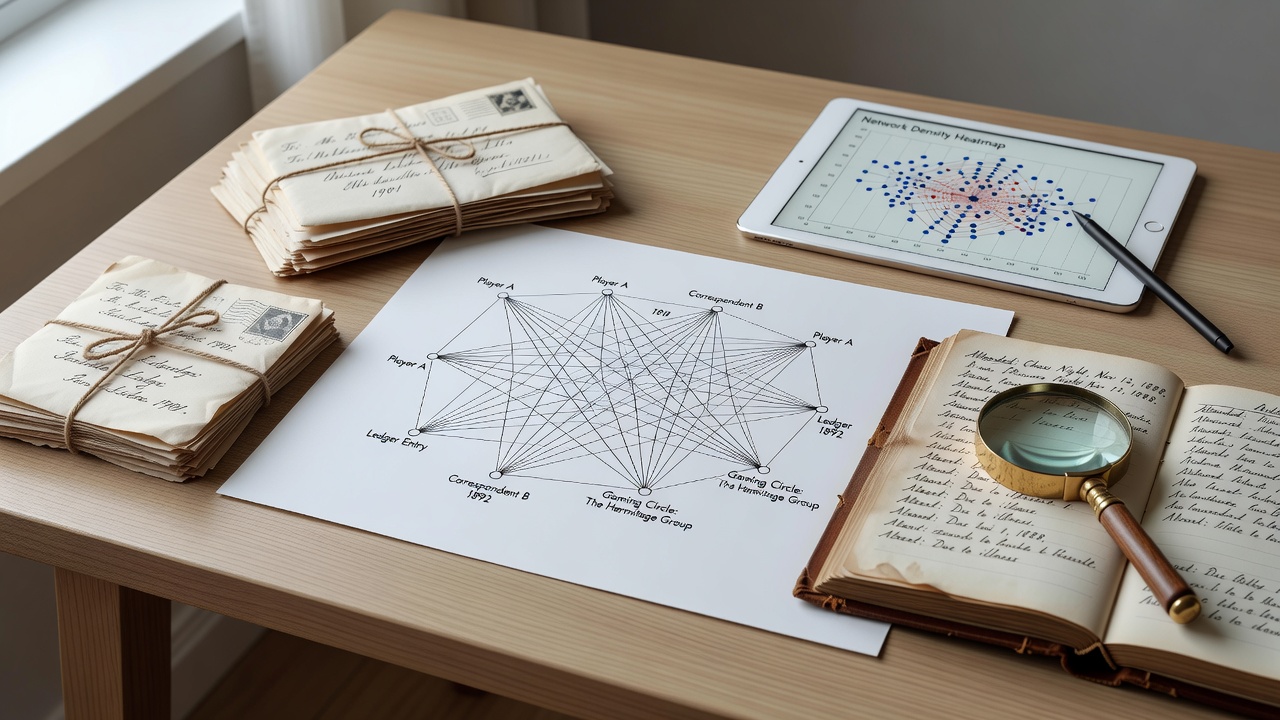
Researchers apply social network analysis to private gaming groups by examining preserved letters and attendance ledgers that document who played with whom across decades, and this approach reveals patterns of connection that extend beyond single venues or eras. Historians and data analysts examine these materials to reconstruct relationships while government records from various regions provide context on regulatory changes that affected participation.
Correspondence as a Primary Data Source
Letters between participants often list specific dates, locations, and other attendees, which allows analysts to build timelines of interactions, and these documents frequently include references to games that occurred outside formal venues. Data from such correspondence shows clusters of recurring names that indicate core groups while peripheral mentions point to occasional participants. Analysts cross-reference these details with external records to verify accuracy and avoid duplication errors in the resulting maps.
One collection from the mid-20th century contains over 400 letters that mention repeated pairings between certain individuals across multiple cities, and researchers used these mentions to identify migration patterns when players relocated for work or family reasons. The same letters also note temporary absences that coincided with broader economic events, which helps explain dips in group activity during particular years.
Attendance Ledgers and Quantitative Mapping
Ledgers record entry dates, names, and sometimes stakes or outcomes, which supplies quantitative data suitable for graph construction where each player becomes a node and shared sessions become edges. Software tools process these lists to calculate centrality measures that highlight influential figures within networks, and such calculations reveal that a small number of individuals often connected otherwise separate subgroups. Figures from multiple ledger sets indicate that participation rates fluctuated with seasonal employment patterns in industrial regions during the 1920s through 1950s.
Combining Sources for Network Reconstruction
Analysts merge letter content with ledger entries to fill gaps where one source lacks detail, and this integration produces denser maps than either source alone can support. For instance, a letter might explain why two names appear together in a ledger even though they lived in different towns, while the ledger supplies exact dates that the letter omits. Researchers at institutions such as those affiliated with Library and Archives Canada have published methodological papers describing these combined approaches and their application to regional gaming records.
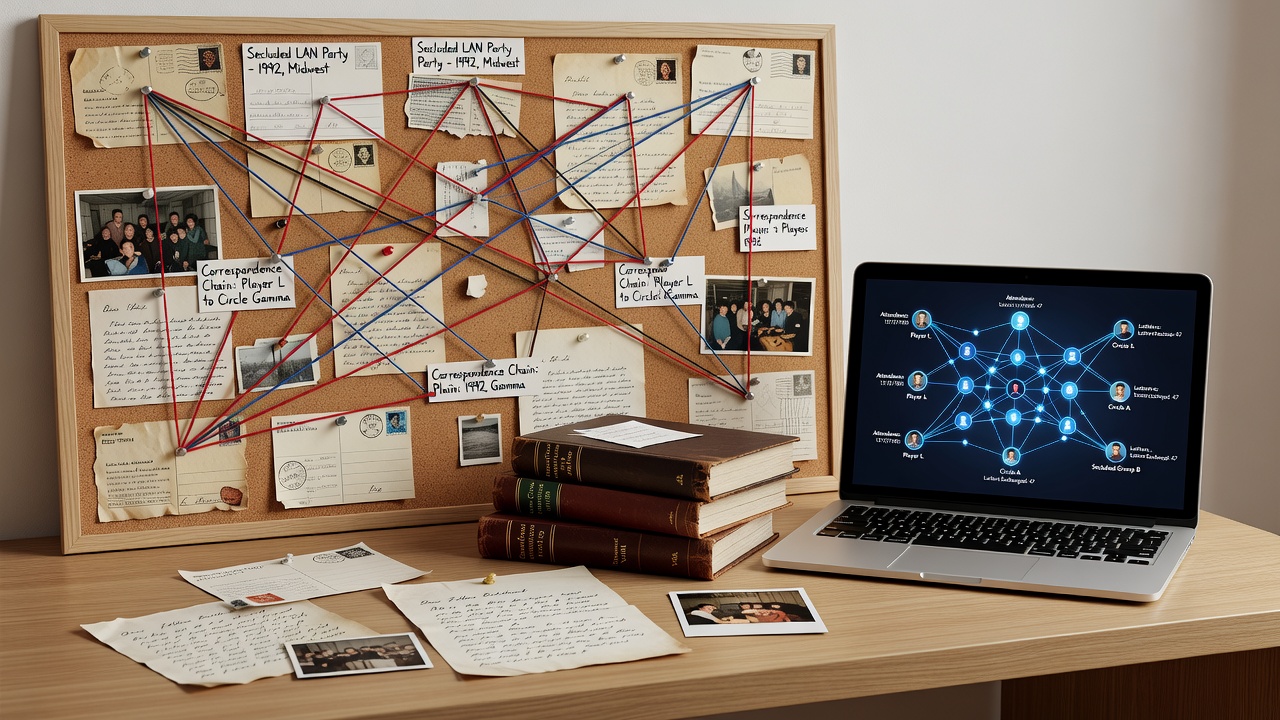
Additional verification comes from newspaper announcements and municipal permits that list events, which allows analysts to confirm whether documented sessions actually occurred and to note any unrecorded participants who appear in public notices. This multi-source method reduces reliance on any single document type and improves the reliability of identified clusters.
Developments Through 2026
Digital scanning projects expanded access to previously private collections during 2025, and in November 2026 several European archives released new digitized ledgers covering the 1930s to 1970s. These releases enabled larger-scale comparisons across national borders, and preliminary analysis indicates that cross-border player movements followed trade routes more closely than previously assumed. Industry reports from organizations such as the Australian Gambling Research Centre note similar patterns in their regional datasets, although those focus on licensed venues rather than private circles.
Network visualizations produced from the combined 2026 datasets display distinct regional modules connected by a limited number of mobile players, and these structures align with known transportation improvements that occurred mid-century. Analysts continue to refine algorithms that account for incomplete records by assigning confidence scores to inferred connections.
Conclusion
Mapping player networks through preserved correspondence and attendance ledgers provides measurable evidence of how secluded gaming circles formed, persisted, and evolved over time. Continued digitization and cross-referencing with regulatory and academic sources support increasingly detailed reconstructions that cover wider geographic areas. The methods described rely on verifiable document trails rather than anecdotal accounts, and ongoing releases of archival material will likely extend these maps into additional periods and regions.