8 Sep 2026
Tracing Social Ties in Private Card Leagues Through Historical Archives and Player Documentation
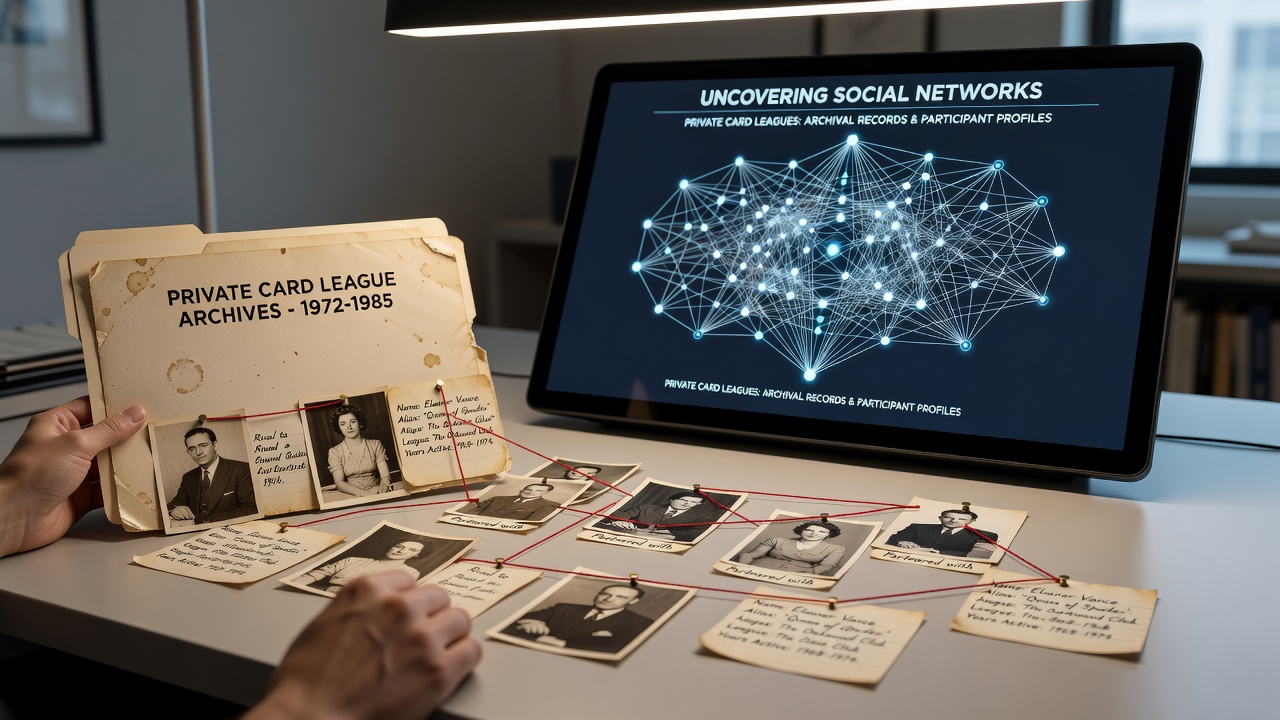
Private card leagues have long operated outside formal structures, yet researchers continue to map the relationships that bind participants together by examining preserved documents and detailed individual histories. These leagues often maintain membership ledgers, game logs, and correspondence that reveal patterns of interaction across decades. Data from such materials indicate recurring clusters of players who compete together over extended periods, with connections extending beyond single events into sustained social circles.
Archival Records as Primary Sources
Archives held by regional historical societies and university collections contain membership rolls, tournament brackets, and financial statements that document participation in private card events. These records frequently list names alongside addresses, occupations, and dates of involvement, allowing analysts to construct timelines of association. In one collection from the mid-twentieth century, repeated pairings of specific individuals across multiple seasons pointed to core groups that organized informal rotations of games among themselves. Cross-referencing these entries with public directories further clarifies geographic proximity and shared workplaces that likely facilitated initial introductions.
September 2026 brought additional releases from several North American repositories, including newly digitized ledgers from community organizations in the Midwest and Pacific Northwest. These materials added thousands of entries that researchers at institutions such as the Library of Congress have begun to process, revealing previously undocumented links between urban and rural participants during periods of economic transition.
Participant Profiles and Network Construction
Profiles compiled from newspapers, club newsletters, and personal memorabilia supply context that plain lists cannot provide. Birth records, obituary notices, and employment histories help establish the age ranges, mobility patterns, and occupational backgrounds of league members. When these details align across multiple sources, they strengthen inferences about how information and invitations circulated within the group. For instance, profiles of players who moved between cities for work often coincide with the appearance of new game sites in those locations, suggesting mobile connectors who maintained ties across distances.
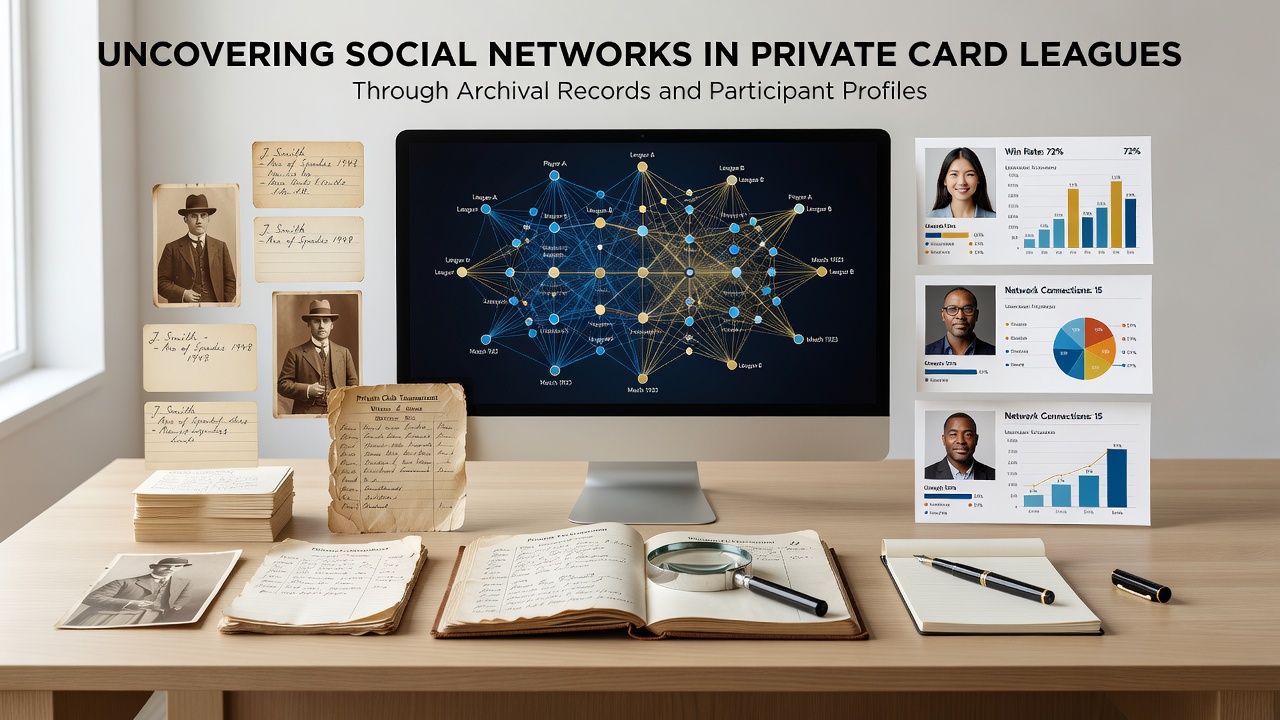
Network diagrams built from these combined datasets show central figures who appear in multiple overlapping subgroups, while peripheral members participate less consistently. Such structures emerge consistently across different regions and eras, according to analyses conducted by academic teams studying recreational organizations. Figures released by the Australian Institute of Criminology in recent reports on community leisure patterns corroborate similar clustering in comparable non-gambling card activities, where sustained participation correlates with shared educational or professional histories.
Methodological Approaches and Data Integration
Researchers apply social network analysis software to digitized records, assigning nodes to individuals and edges to documented co-participation. Weighting these edges by frequency and duration of association produces visualizations that highlight stable cores versus transient participants. Validation occurs through triangulation with oral histories collected from surviving members or their descendants, though access remains limited by privacy considerations. Studies published in journals focused on historical sociology demonstrate that this mixed-method approach reduces reliance on any single source type and increases the reliability of identified connections.
Additional datasets from Canadian provincial archives and European municipal collections expand the geographic scope, showing parallel developments in how private leagues adapted to changing transportation and communication technologies. These international comparisons indicate that core-periphery structures appear regardless of local regulatory environments, provided the leagues remained outside commercial venues.
Conclusion
Combining archival records with participant profiles yields measurable evidence of enduring social networks within private card leagues. The approach continues to benefit from ongoing digitization projects and cross-institutional collaborations that surface previously isolated documents. As new materials become available, analysts expect further refinement of maps that trace how individuals and groups sustained these recreational communities across time and place.